Vedic 16 Sanskar - About Everything
The Vedic Tradition has sixteen religious ceremonies known as Vedic 16 Sanskars or the Sacraments of Life. The Vedic 16 Sanskar is performed for the individual’s physical, social, and spiritual development. Arya Samaj Pandit Ji provides good and learned priests. Please call our helpline. Or you can also Book an Arya Samaj Panditji for Vedic 16 Sanskar with filling “Book a Pandit Form”.
16 Sanskar all details available here step by step -
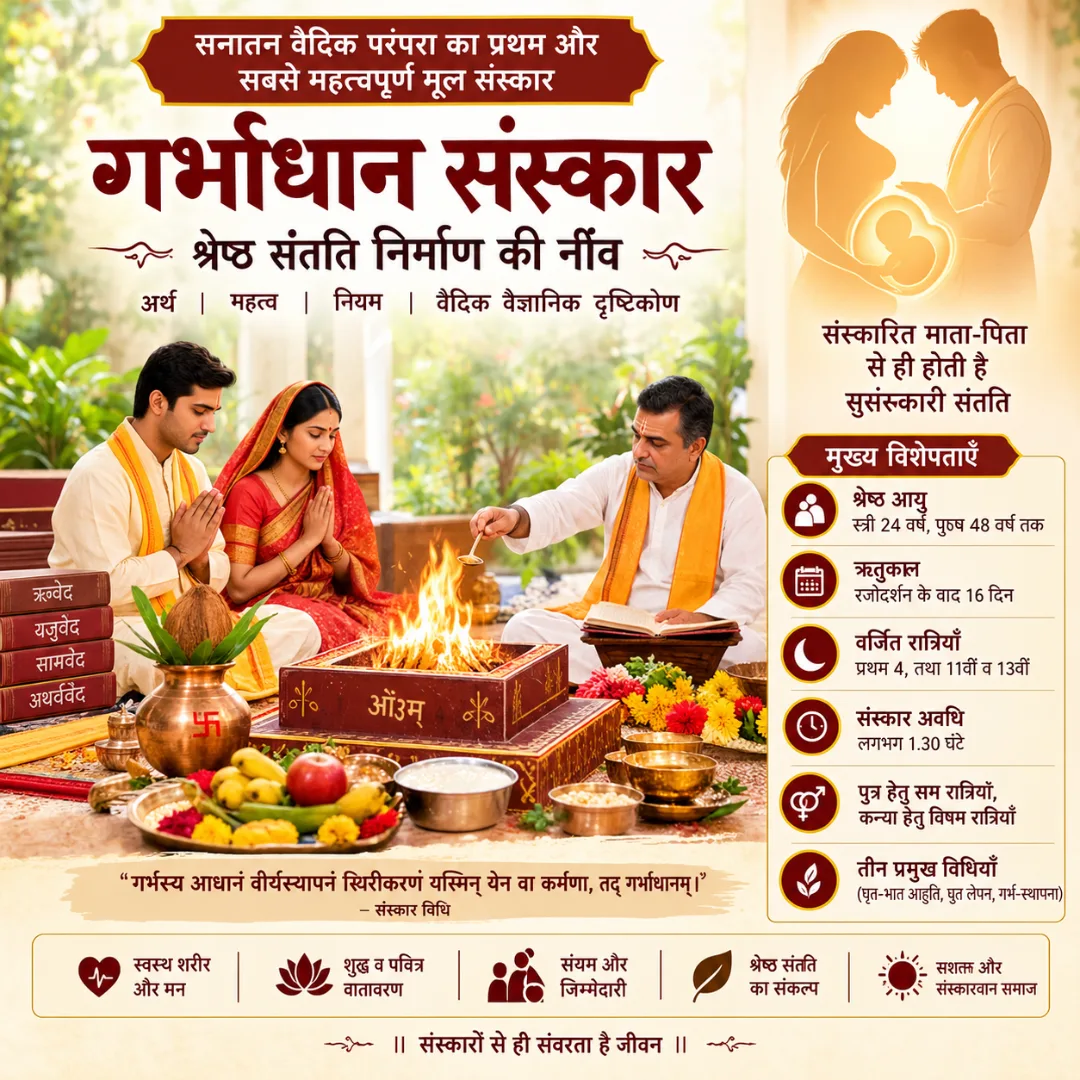
1: GARBHADHAN SANSKAR
This Sanskara Is Performed For The Fulfillment Of One’s Parental Obligation And A Continuation Of The Human Race. This Is A Fervent Prayer For The Impregnation Of The Foetus With The Life-Giving Soul Force. Garbha Means Womb And Dhana Means Give Or Donate. This Sanskara Is Performed After Marriage And Before The Conception Of A Child. In This Sanskara, The Couple Chants Vedic Mantras For A Healthy, Loving And Happy Married Life And The Wish For A Son Or Daughter That Would Bring New Joy In The Home. read more
2: PUNSAVAN SANSKAR
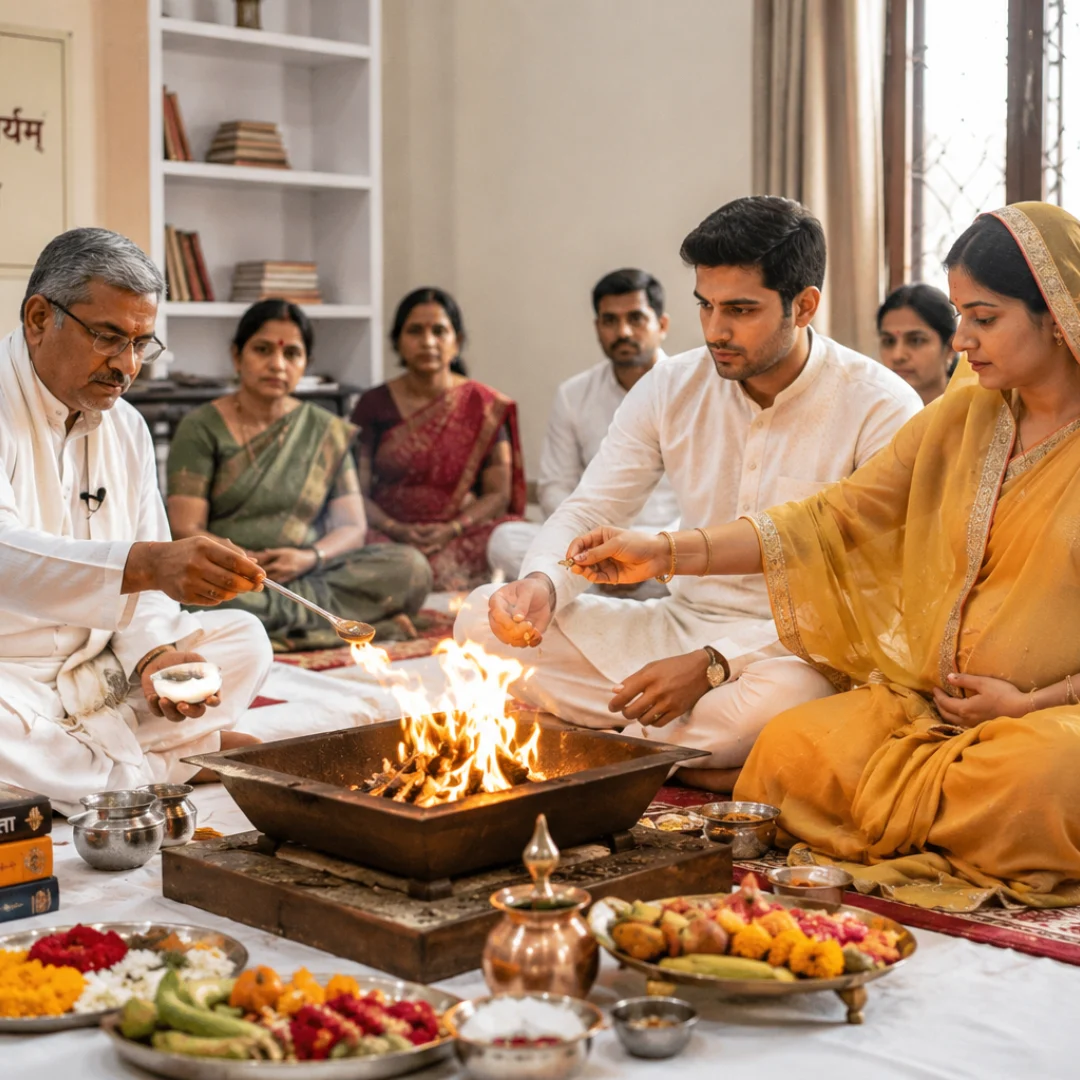
During The Third Or Fourth Month Of Pregnancy The Punsavana (Protection Of The Fetus) Sanskara Is Performed For The Physical Growth Of The Child. read more
3: SIMANTONNAYAN SANSKAR
This Sanskara Is Performed During The Seventh Month Of Pregnancy. The Parents To Be And Their Relatives Offer Prayers To The Almighty Mental Growth Of The Child. read more
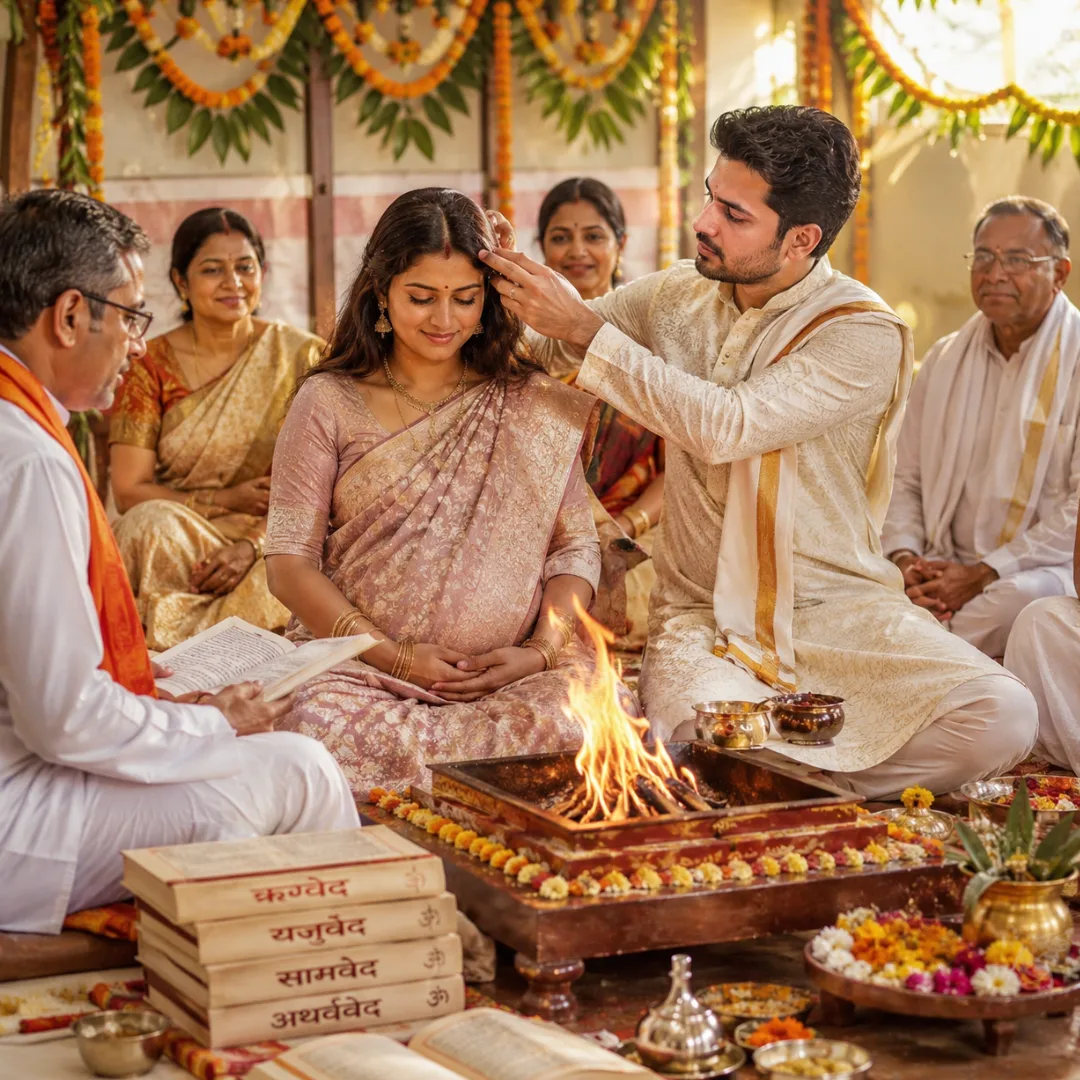
4: JATAKARM SANSKAR
The Jatakarma Sanskara (The Child’s Nativity) Should Be Done Immediately After The Birth Of The Child. This Sanskara Is Done To Welcome The New-Born Child. The Father Writes AUM On The Tongue Of The Child With A Thin Bar Of Gold Dipped In Honey. He Whispers The Word “VEDO-ASI” (You Are Veda – Knowledge) In The Ear Of The Child. read more
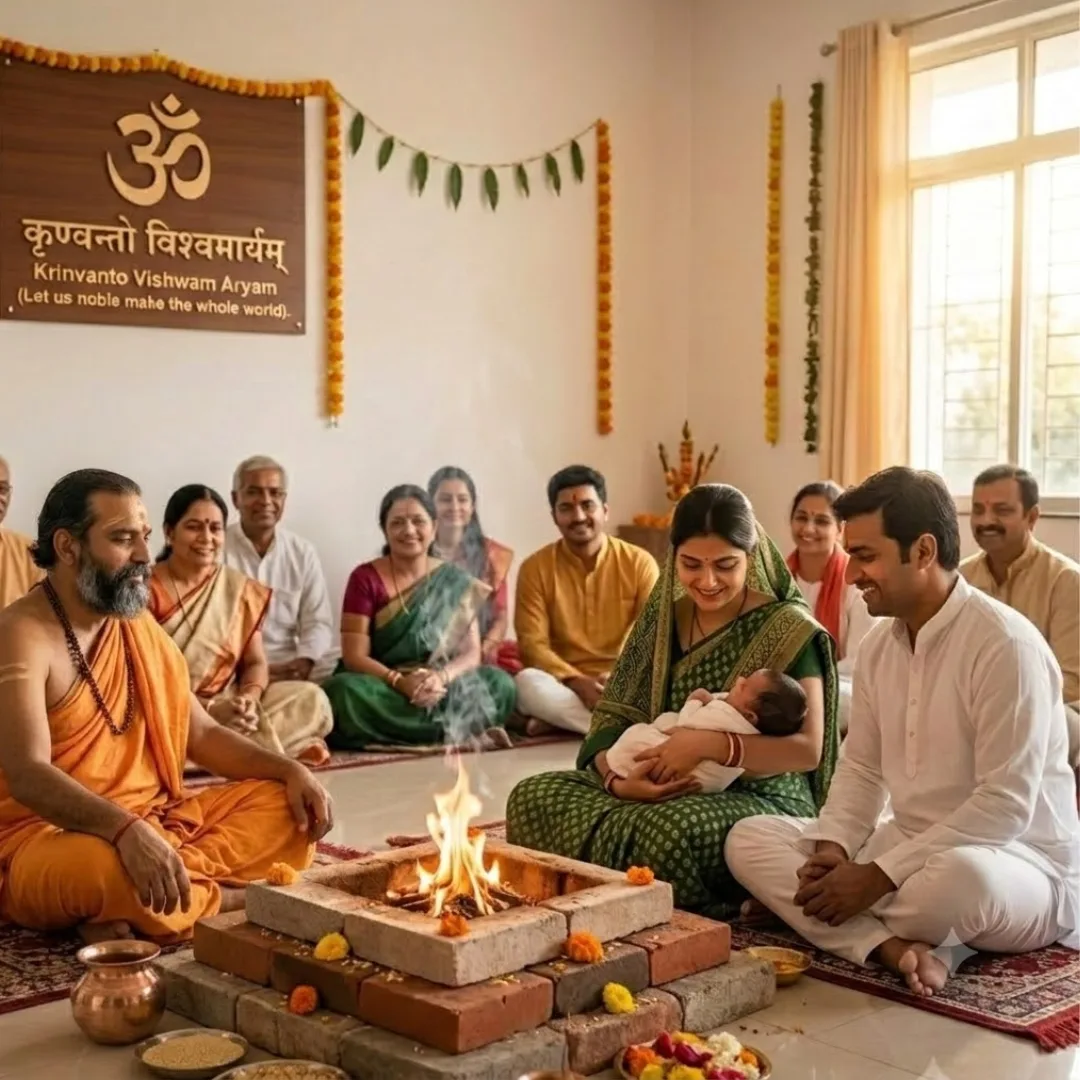
5: NAMAKARAN SANSKAR
Nama Literally Means ‘Name’ And Karan Means ‘To Make, To Effect’. Thus, In This Sanskara The Child Is Given A Name. This Sanskara Should Be Performed On The 11th Day After The Birth Of The Child. read more
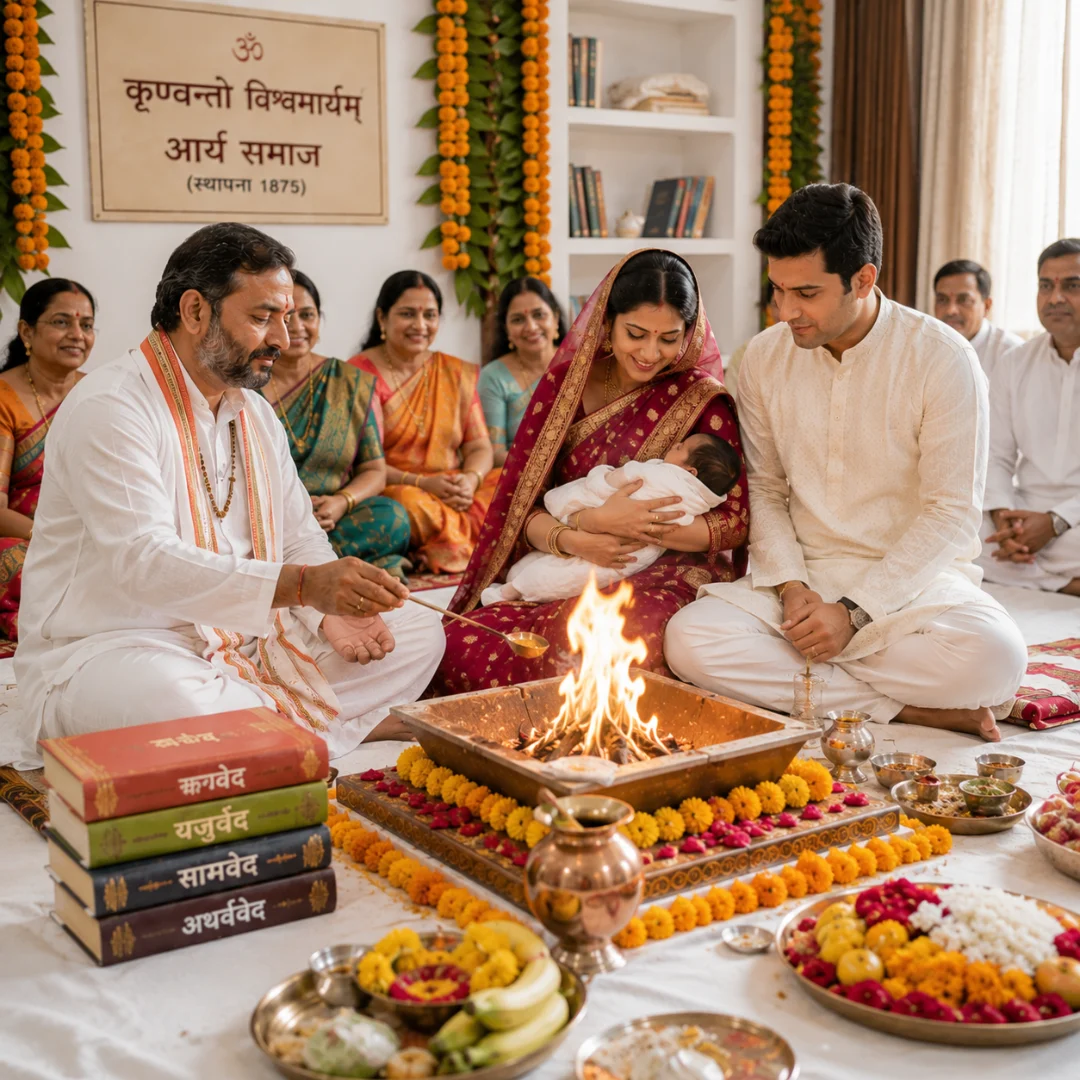
6: NISHKRAMAN SANSKAR
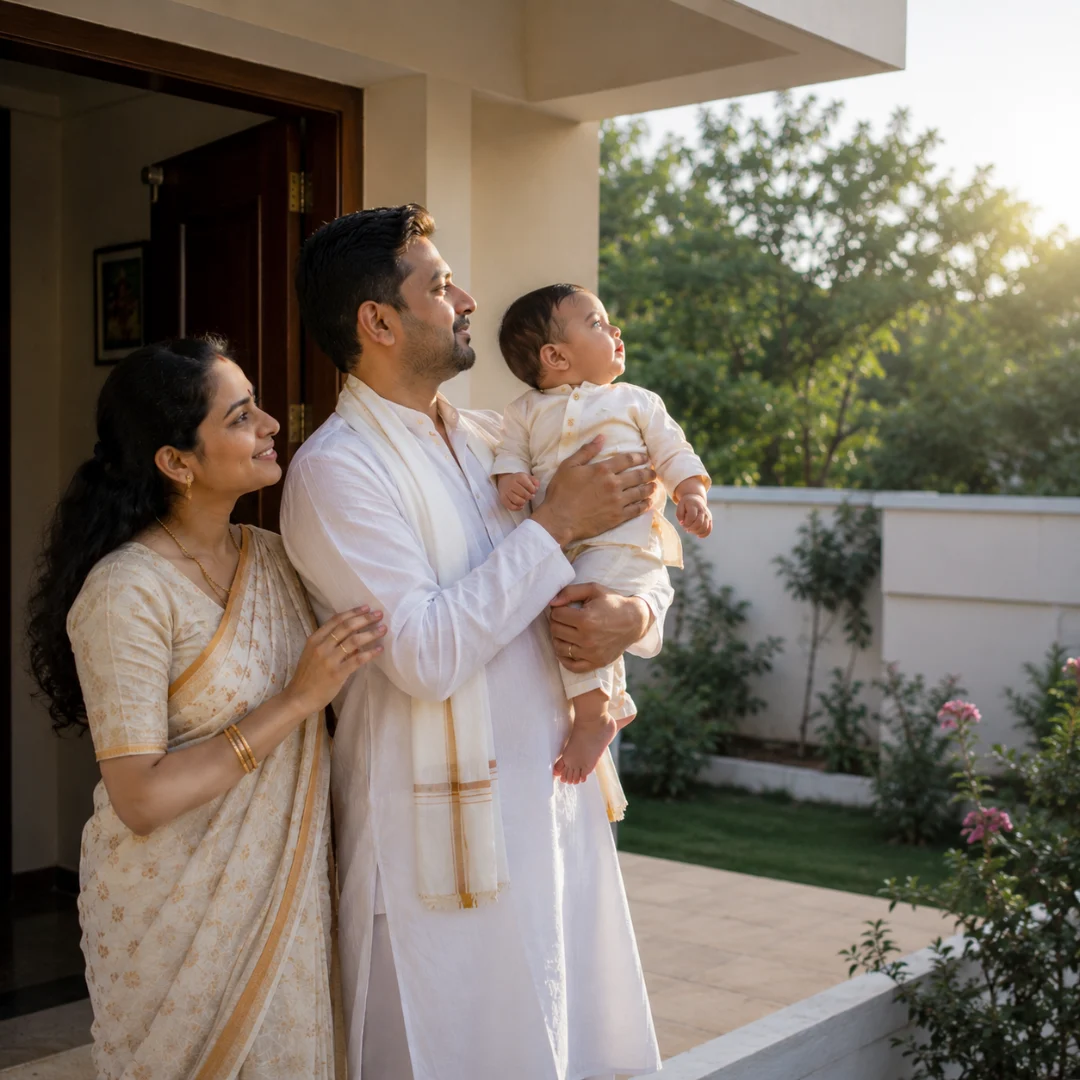
The 4th Month After The Birth Of The Child, The Nishkramana Sanskara Is Performed. Here The Child Is Taken Outside The Home For The First Time To Be Exposed To The Different Elements Of Nature. read more
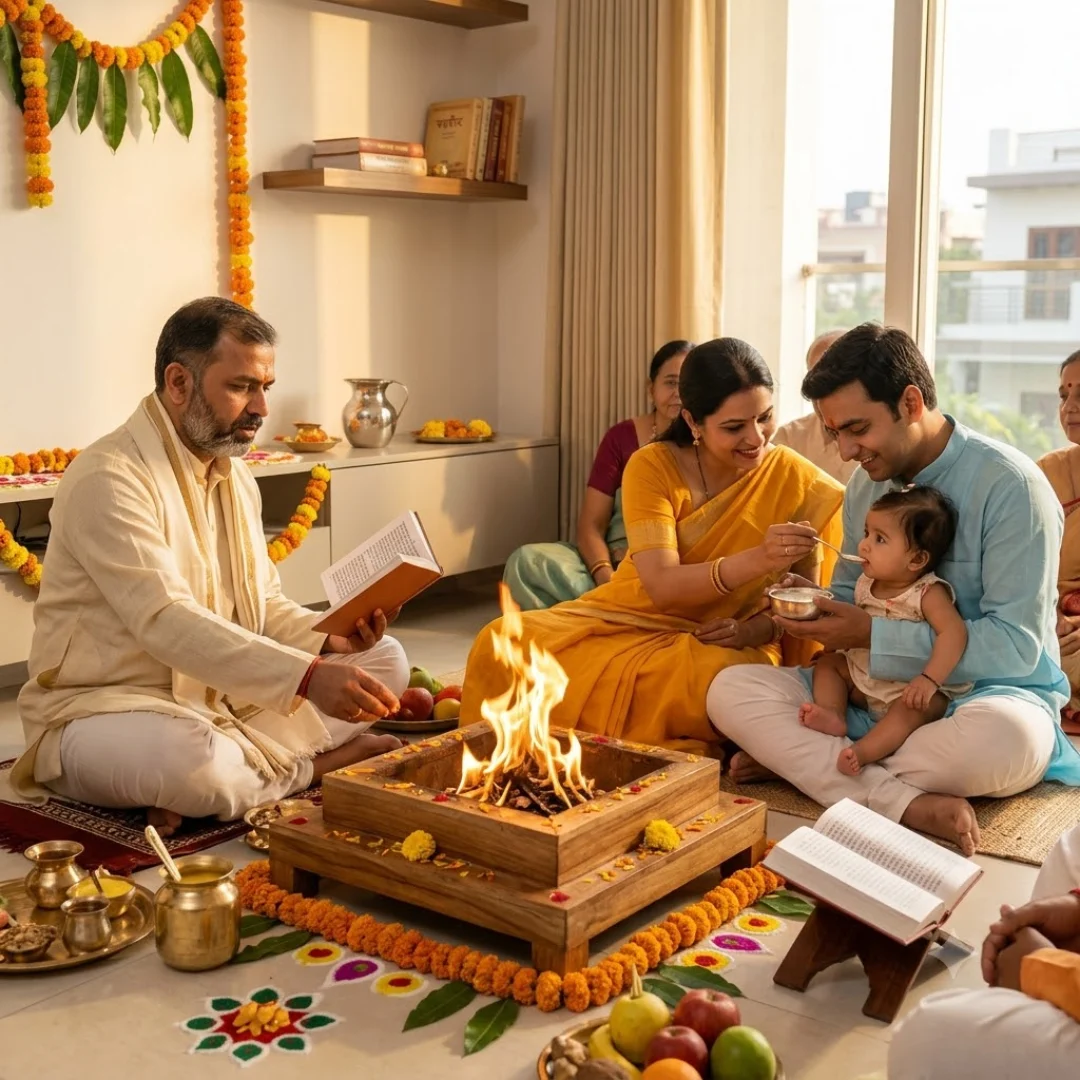
7: ANNA-PRAASHAN SANSKAR
Anna Means ‘Food’ And Prashana Mean ‘Eating, Feeding’ Thus, Giving Solid Food To The Child For The Very First Time Performs This Sanskara. read more
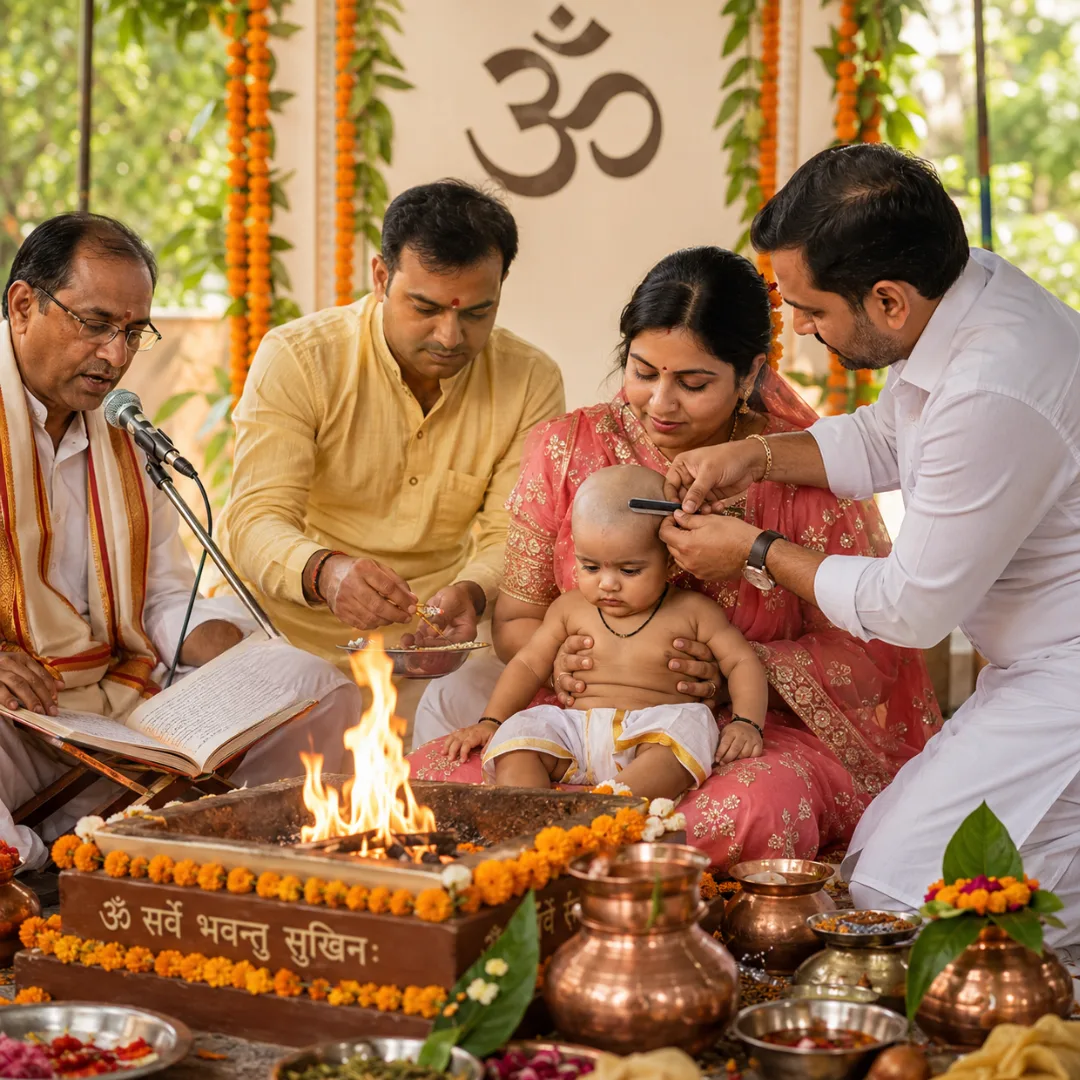
8: MUNDAN SANSKAR
9: KARNAVEDH SANSKAR
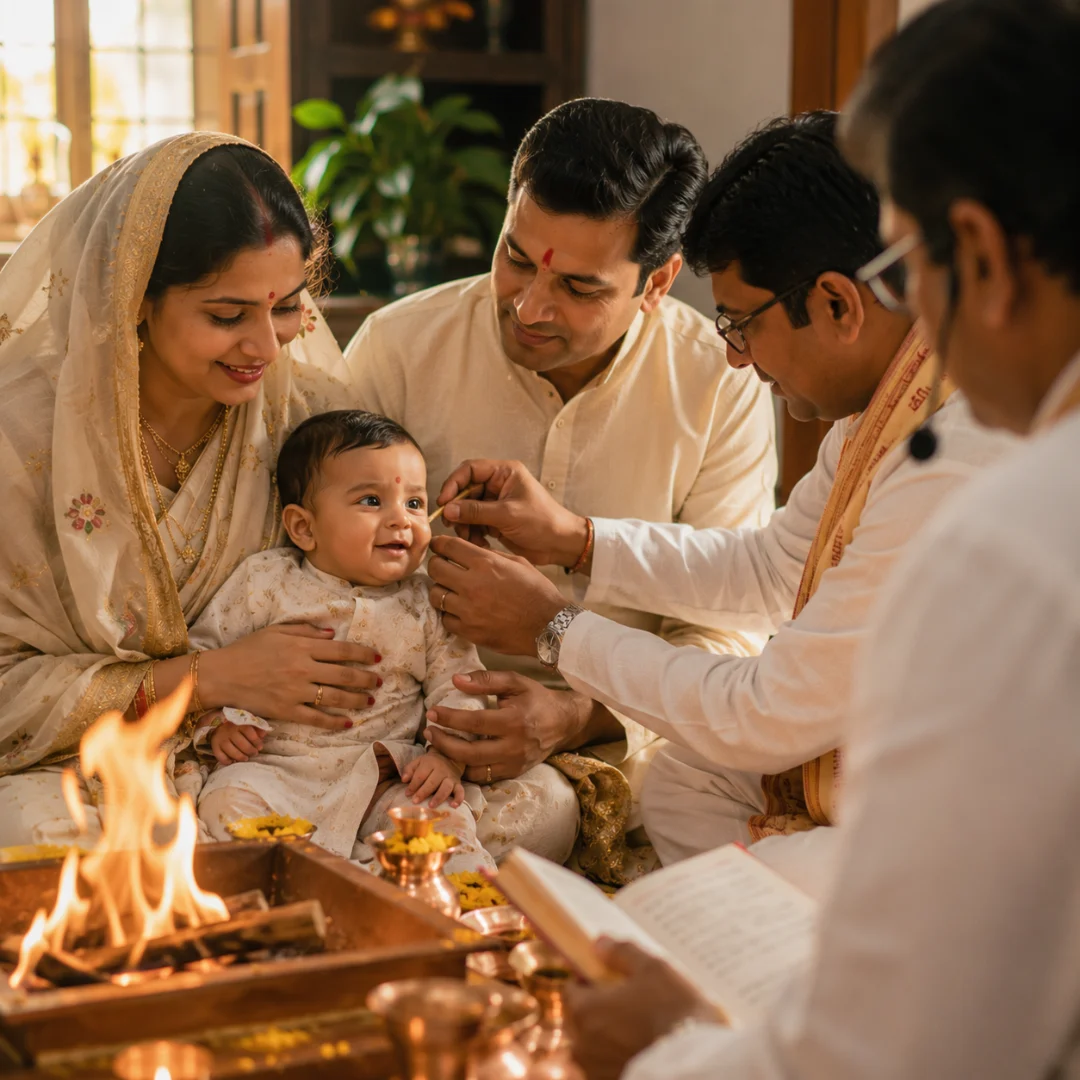
The Piercing Of The Lower Lobes Of The Child’s Ears At The Age Of Three Performs The Karnavedha Sanskara. Prayers Are Offered To The Almighty For The Physical Well Being Of The Child. read more
10: UPANAYAN SANSKAR
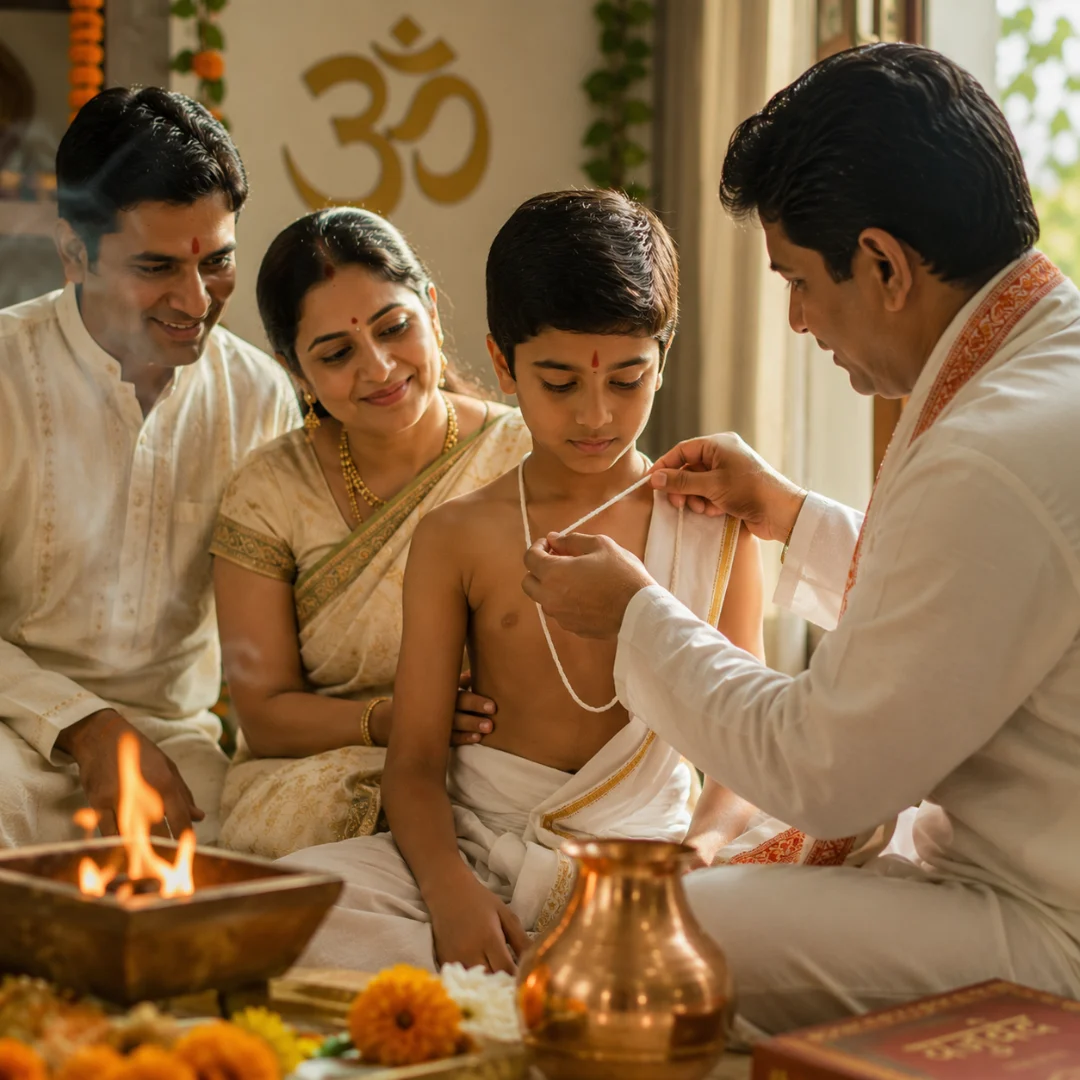
Upanayana Or The Thread Ceremony Is Performed Anytime Between The Ages Of Five To Eight Years Old. Upa Mean ‘Approaching Towards’ And Nayanam Means ‘Leading’. In This Sanskara The Child Is Given The Yajnopavit (Sacred Thread), Which Is Made From Three Strands Representing The Three Letters Of AUM. The Three Strands Also Symbolize The Three Discipline Of Life, Which Are Knowledge, Action And Devotion. read more
11: VEDARAMBH SANSKAR
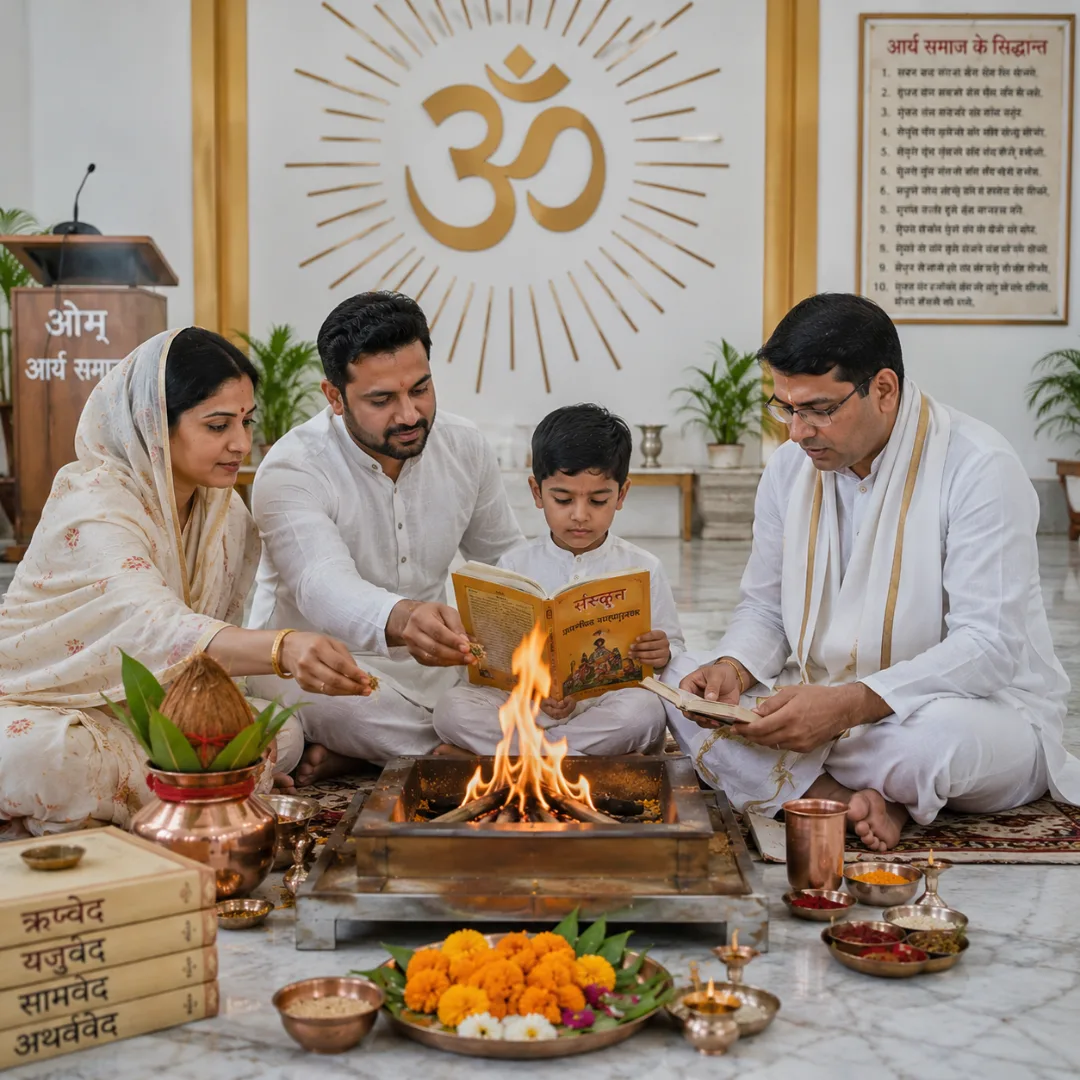
This Sanskara Is Done Immediately After The Upanaya Sanskara. Now The Child Becomes A Student. The Child Will Now Gain Knowledge From The Vedas And Other Religious Text As Well The Other Branches Including Mathematics And Science. Thus The Child Will Be Able To Progress In Life Spiritually As Well As Materially. read more
12: SAMAVARTAN SANSKAR
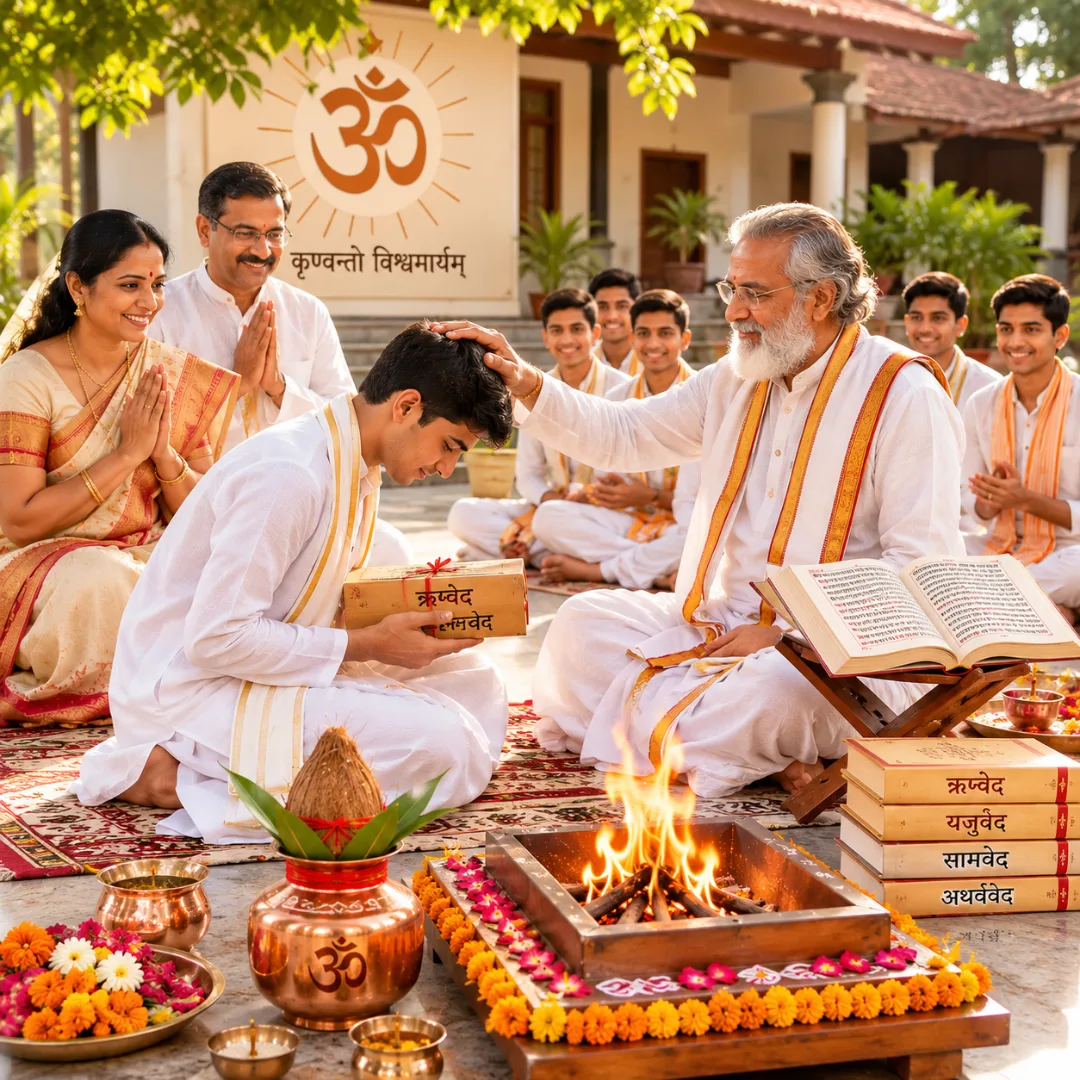
Between The Ages Of Twenty-One And Twenty-Five Years This Sanskara Is Performed. This Student Should Have Now Completed All His/Her Studies And Start A New Life Of Self-Realization And Independence. read more
13:VIVAH SANSKAR
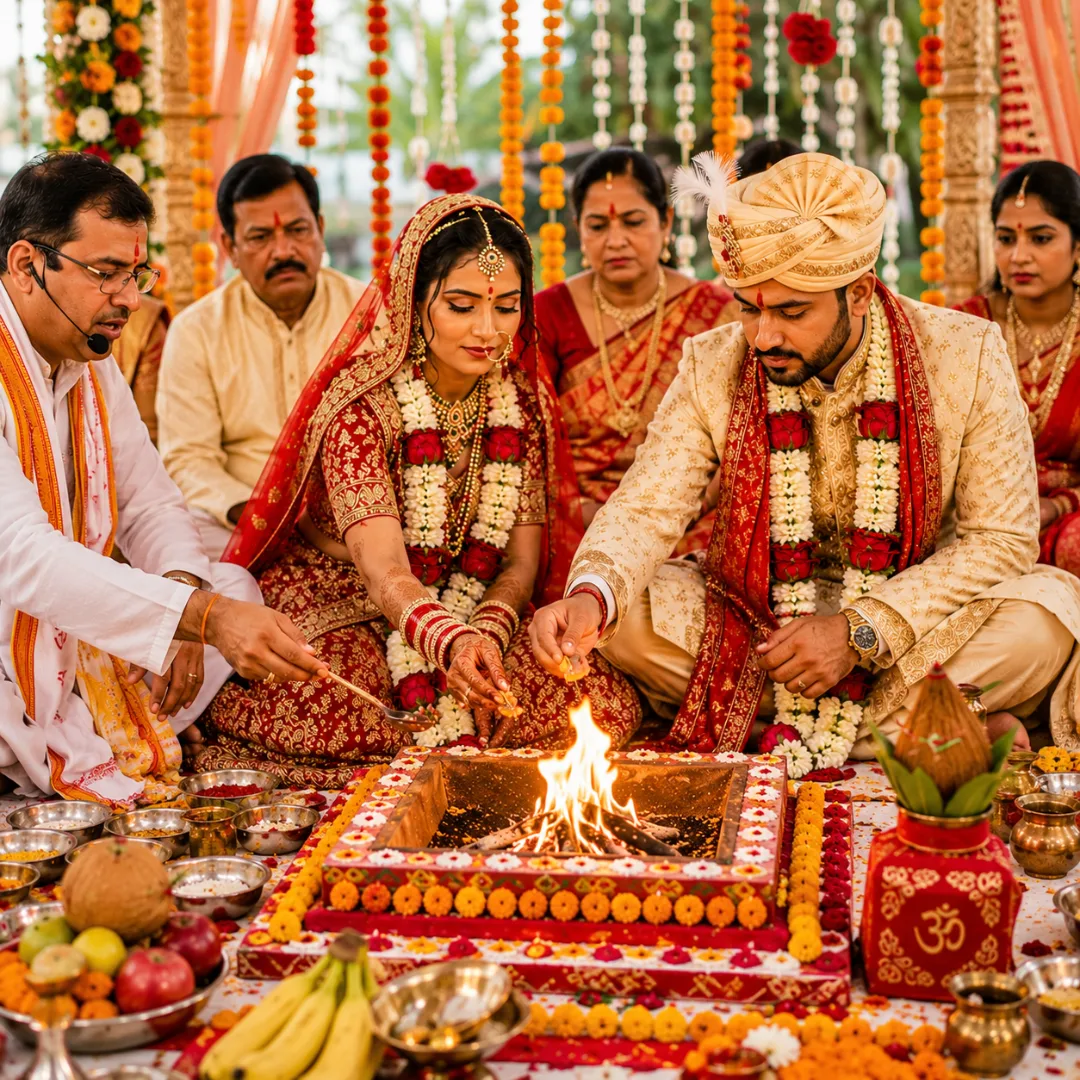
Vivaha Sanskara Is Performed When The Student Decides To Get Marry. This Is One Of The Most Important Sanskara Among The Sixteen Vedic Sacraments. This Is The Foundation That Forms The Very Basis For A Coordinated Family Life. read more
14: VAANAPRASTH
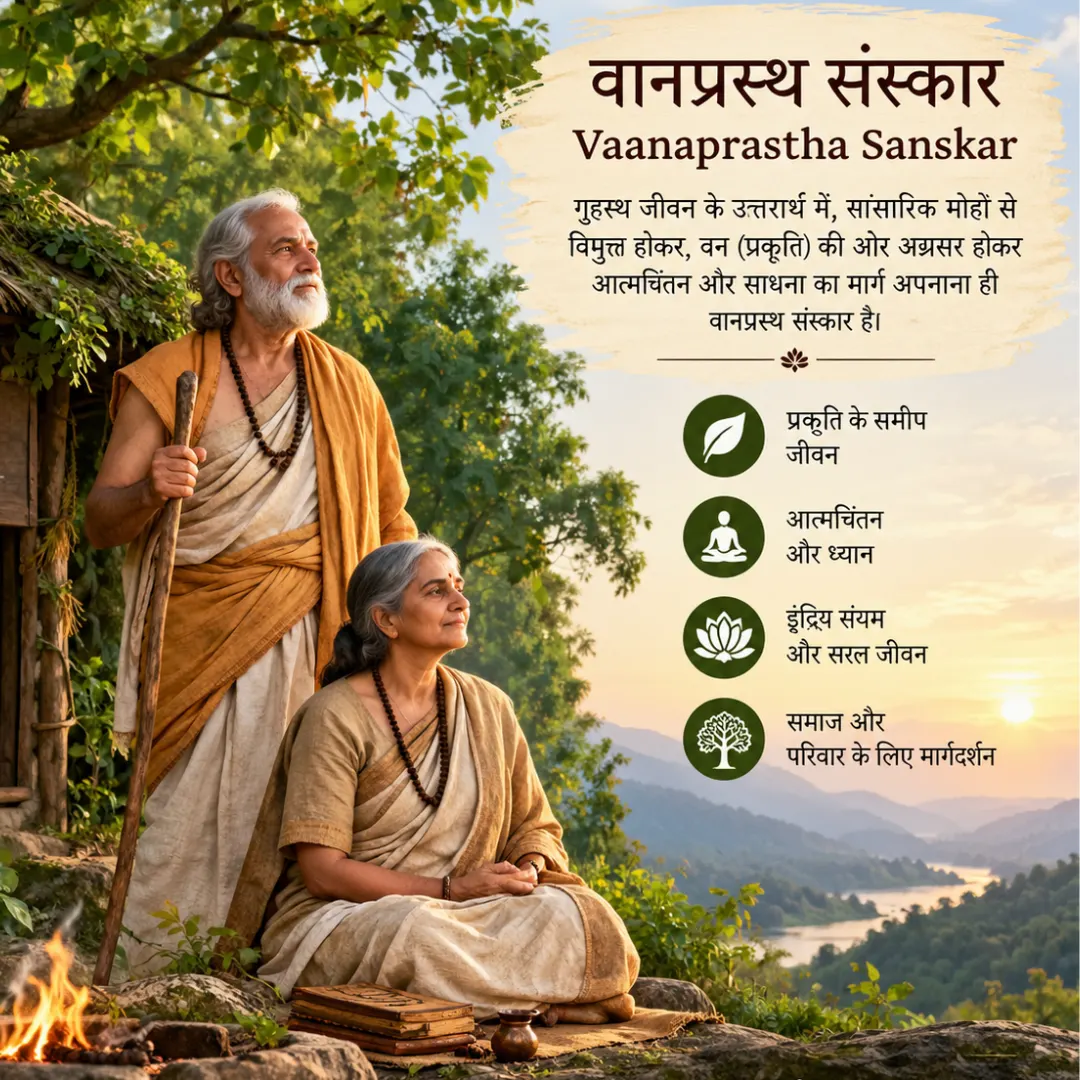
At Age Fifty-One Years Old, A Person Performs The Vaanaprastha Sanskara By Relinquishing All Livelihood From Which He/She Will Gain Personal Benefits. All The Family Responsibilities Will Be Given To The Children.
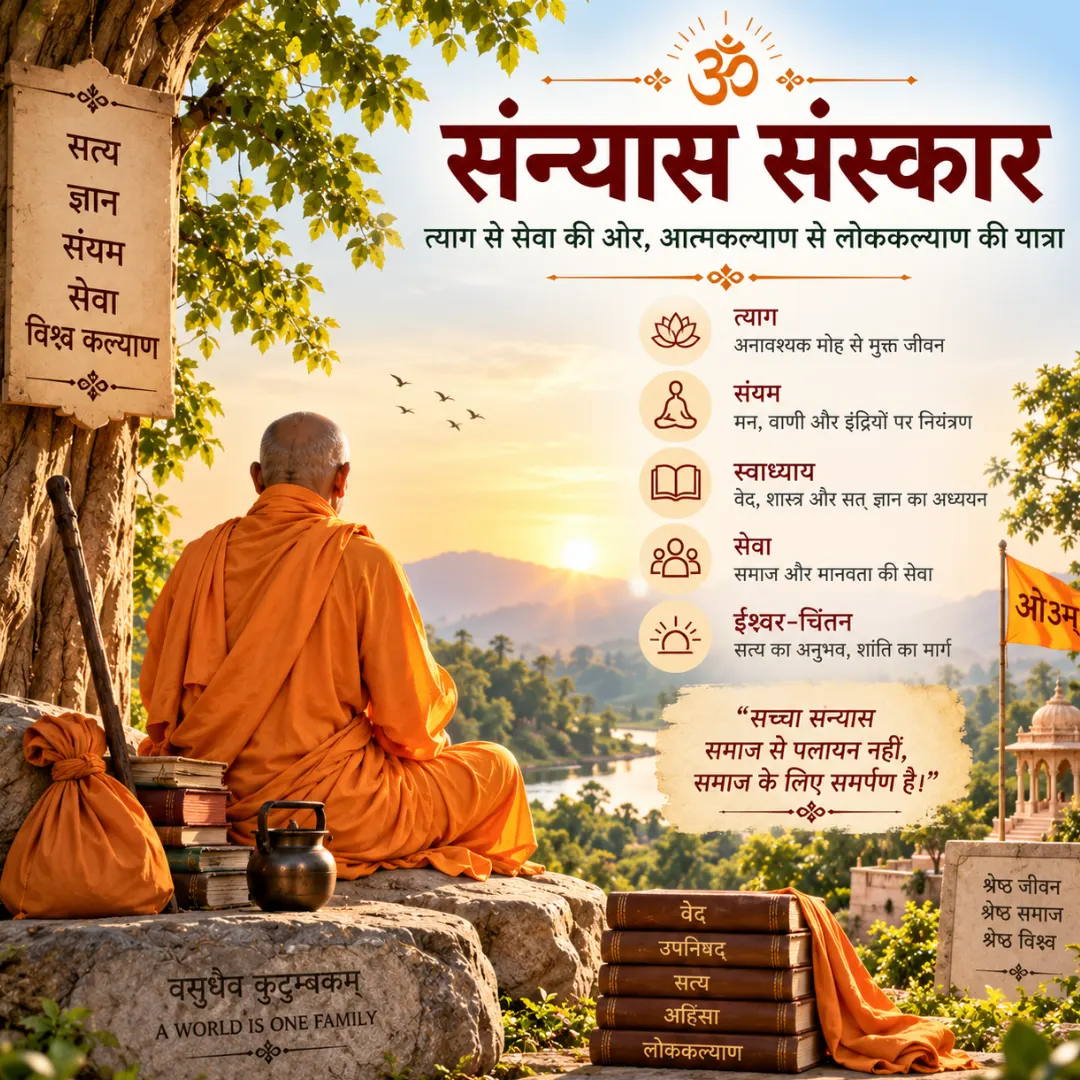
15: SANNYAAS
This Sanskara Is Performed At The Age Of Seventy-Five Years. In This Sanskara A Person Forsake All Material Things And Starts To Lead A Life Of Meditation And Contemplation Onto The Almighty.
16: ANTYESHTI SANSKAR
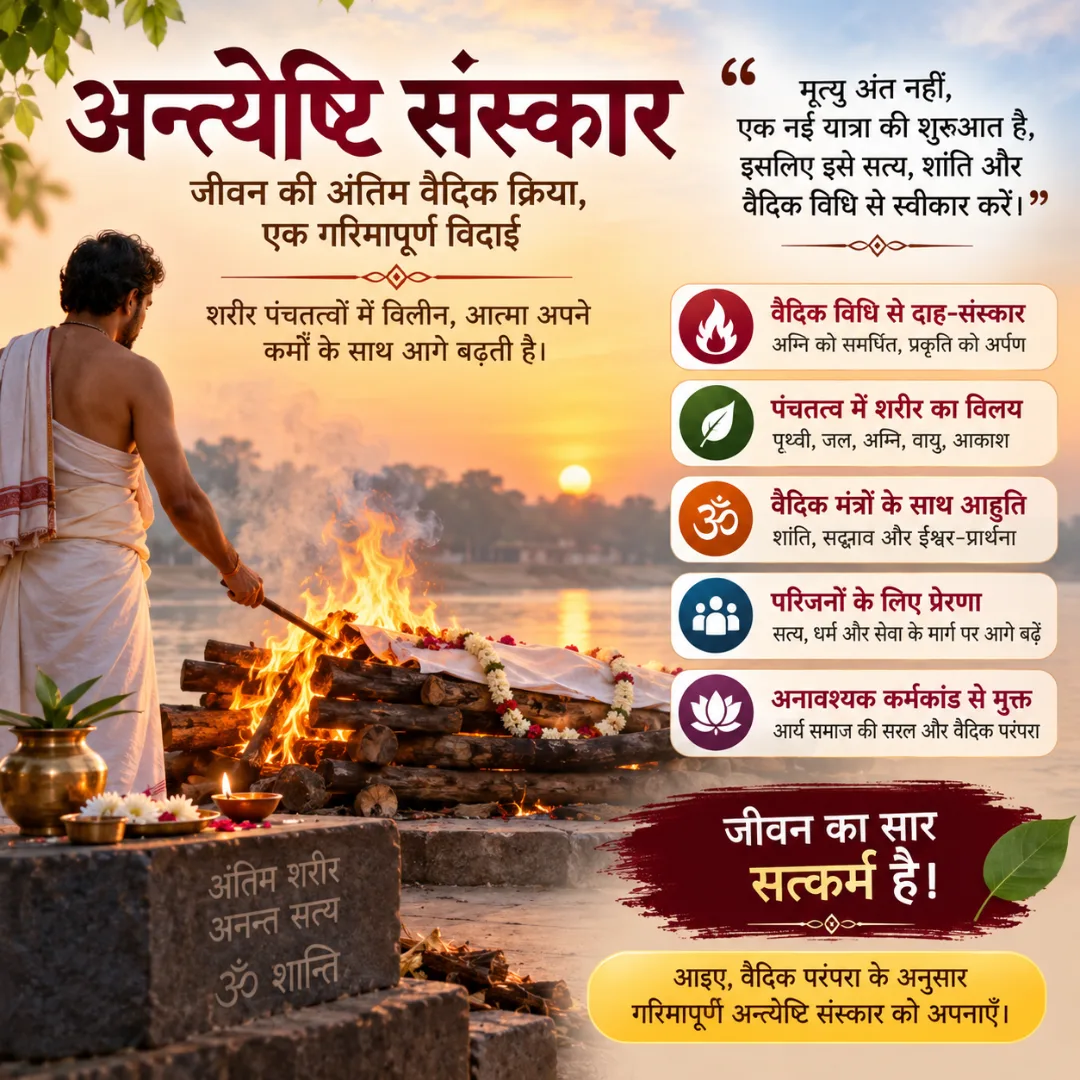
The Antyeshti Is The Last Sanskara Performed When The Individual Dies. After Death This Sanskara Is Performed When The Body Is Cremated. As The Atma (Soul) Is Immortal, It Cannot Be Destroyed; But The Body Which Is Made Of Clay, Water, Fire, Air And Ether Once Again Returns To These Elements.